 LittleRoadsCo.
Personalized gifts for kids that actually mean something
Most personalized gifts for kids are a name stamped on something generic. A backpack with "Emma" on it. A puzzle with their birth date. Nice enough, but the personalization is surface-level. The object underneath could belong to any child. The best personalized gifts work the other way around: the object itself is unique to the child, not just the label.
The problem with most "personalized" kids' gifts
Personalization has become a marketing category more than a design philosophy. Scroll through any gift guide and you'll find dozens of products that offer to add a child's name to a mass-produced item. The blanket is the same blanket. The book follows the same story. The water bottle is identical to a thousand others except for the letters printed on the side.
Kids notice this, by the way. A three-year-old might not articulate it, but they can tell the difference between something made for them specifically and something made for anyone with their name. The gifts they return to again and again tend to be the ones that connect to their actual life, not just their identity in the abstract.
That's the gap worth thinking about when you're shopping for a child. Not "what can I put their name on?" but "what can I give them that nobody else in the world would have?"
What makes a gift genuinely personal
A genuinely personalized gift reflects something true about the child's world. Not just their name, but where they live, what they see every day, the places that matter to them. A four-year-old's world is small and intensely local. Their universe is their street, their school, the park they go to on Saturdays, the bakery where they get a cookie after errands. A gift that captures that world captures something real.
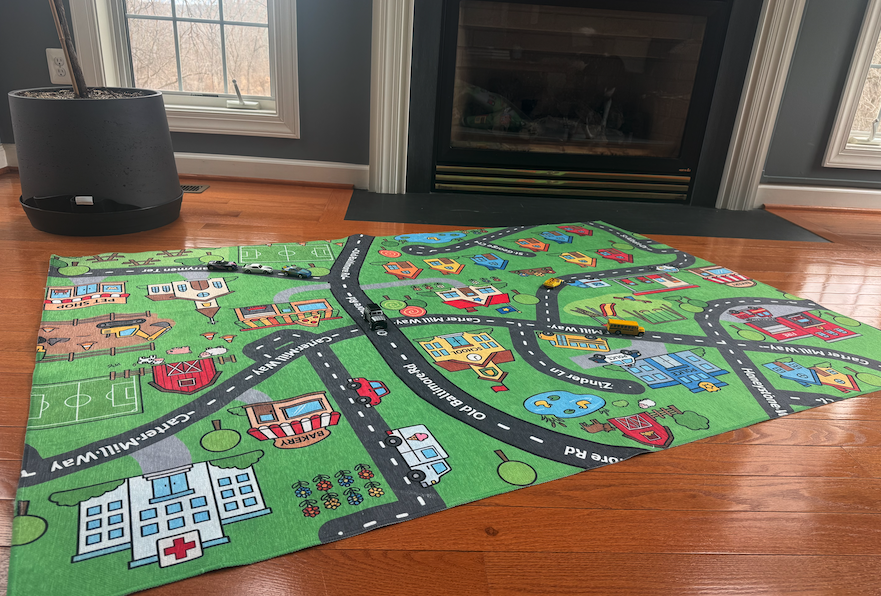
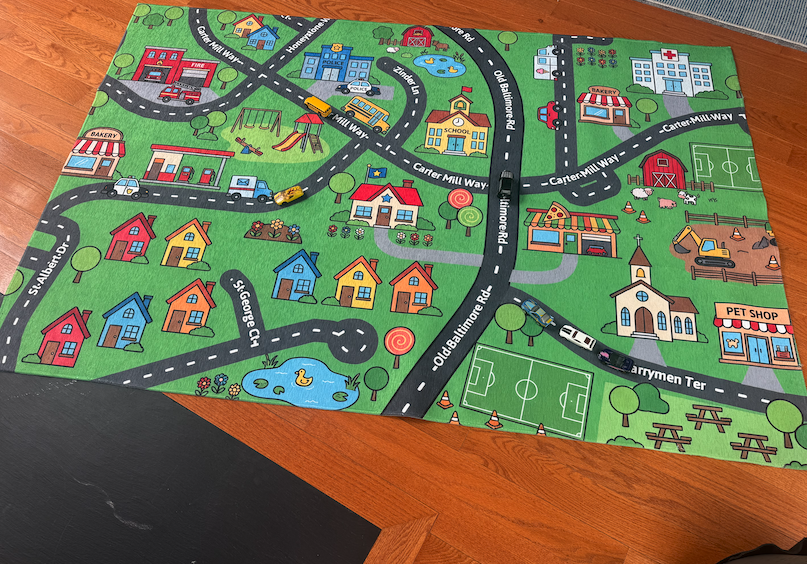
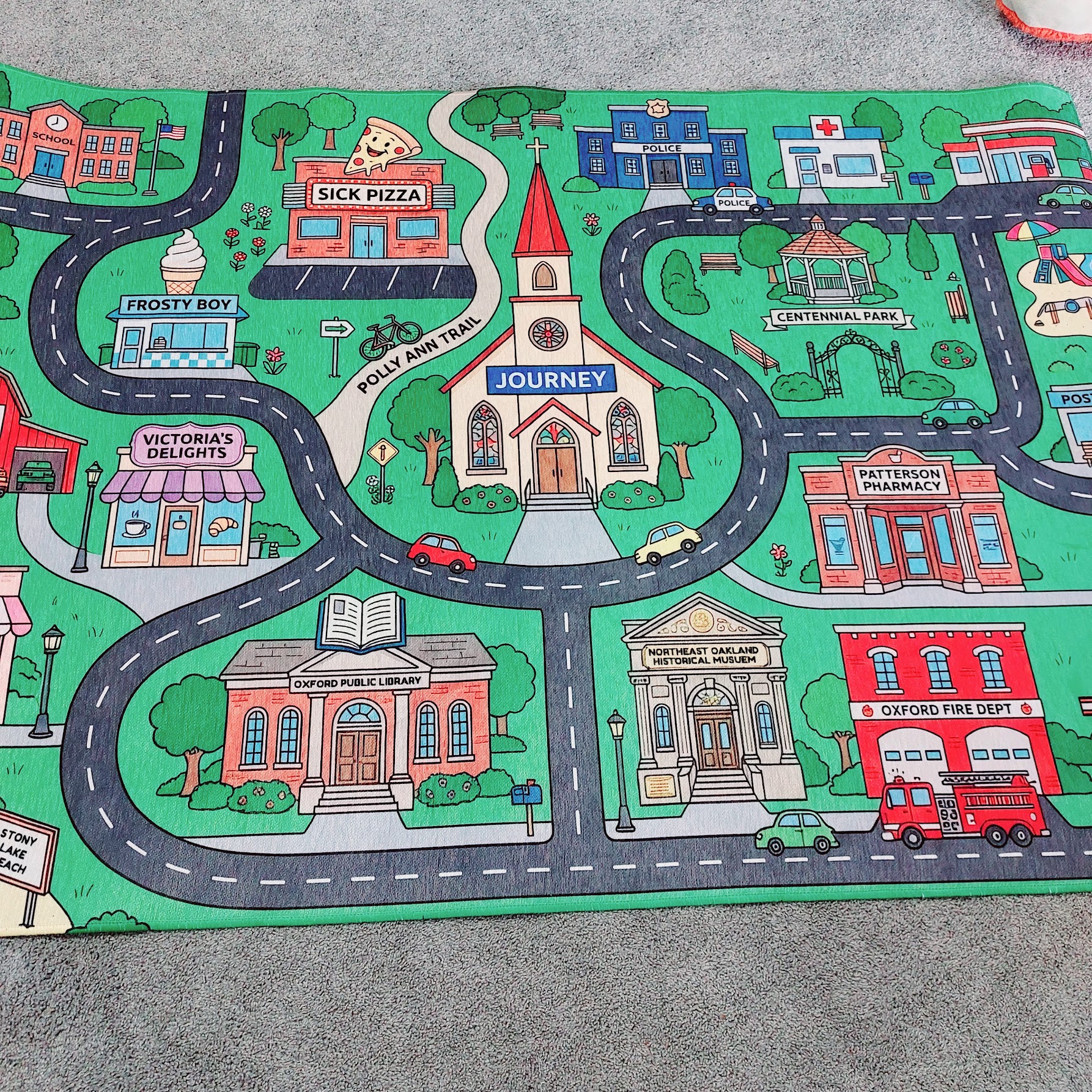
That's the idea behind a custom neighborhood play mat. You enter an address, and the rug that arrives features the actual roads, buildings, and landmarks surrounding that location. The child's house is marked. The streets are the streets they know. The school, the library, the fire station down the road are all there, illustrated in a style designed for toy cars and imaginative play.
It's personalized in a way that goes past the name. Two kids on the same block would get the same rug. Two kids in different neighborhoods would get completely different ones. The personalization comes from geography, not typography.
Why it works as a gift
The reaction when a child recognizes their own neighborhood on a rug is immediate and specific. They point to things. "That's my school!" "There's the playground!" "Is that where the ice cream truck parks?" The recognition creates a connection to the gift that a generic toy can't replicate. It's theirs in a way that a name on a label doesn't achieve.
It also has staying power that most personalized gifts don't. A monogrammed item is used until it's outgrown. A neighborhood play mat gets played with differently as the child grows. At three, it's a surface for pushing cars. At five, it's the backdrop for elaborate stories about the people who live in the houses. At seven, it's a map they use to plan bike routes with friends. The gift keeps up because the neighborhood keeps meaning something.
For the gift-giver, it solves the perennial problem of what to get a child who already has plenty of toys. A custom rug isn't competing with the toybox. It's a different category entirely. It's decor and play surface and geography lesson and conversation starter, all in one.
When it's the right gift
Birthdays are the obvious occasion, but the gift works especially well in a few other situations. A child who just moved to a new neighborhood gets a rug that helps them learn their new streets. A grandchild who lives far away gets a rug of their neighborhood that makes the connection feel closer. A preschooler who's about to start at a new school gets a rug that shows the school and its surroundings before they ever walk through the door.
Holidays work too, especially when you're buying for a child whose parents have asked everyone to please stop buying plastic. A rug is a gift the parents actually want in the house. It's functional, it's attractive, and it doesn't make noise or require batteries. That combination is rarer than it should be in the children's gift market.
Their neighborhood. Their rug.
Enter any address and we'll turn that neighborhood into a custom play mat. Real streets, local landmarks, the child's home right in the center.